






Hydro Form Embossing
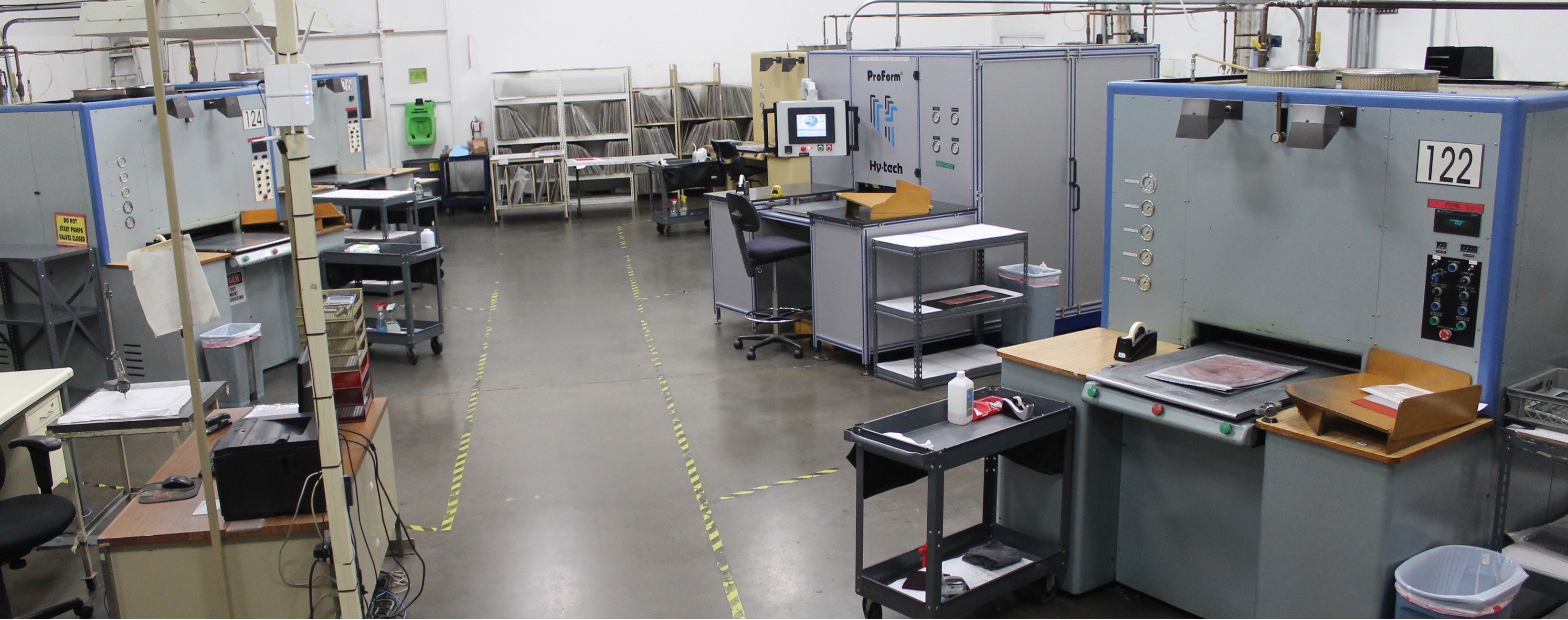
The Hytech Hydro-Forming process utilizes patented technology to apply hydraulic pressure to thin film plastic to emboss or form shapes. In a conventional embossing or debossing process, matching male and female die sets are used to form the material. As the two halves come together, pressure is applied to unsupported film. This creates un-equalized strains in the substrate material that can distort the form shape and cause graphic registration shift.
The principle behind Hytech Hydro-Forming (also referred to as ProForm®) is the elimination of one-half of the die set and replacing it with a hydraulic fluid cell assembly that has a diaphragm type surface. The hydraulic fluid cell is the active compressive “counter die” in all cases. This single-side tool system allows materials to be pin registered to the exact image transfer on the die plate. The diaphragm has an elastomeric face that prevents any miss-strikes, and applies hydrostatically equalized pressure to minimize distortion.
View DetailsThe advantages of the Hytech Hydro Form process area:
|
The hydro form process applies hydrostatically equalized holding forces to the entire die surface and substrate before forming occurs. These “blank holding” forces are applied first to the non-embossed areas clamping the material and allowing the embossed areas to be embossed without wrinkle. |
|
The hydro form process utilizes one-sided tooling, minimizing the opportunity for miss registration between two halves. Pin registration is incorporated into the tooling to insure precise location of graphic to tool. Pin registration also improves sheet-to-sheet repeatability. |
|
The hydro form process does not require heat in order to achieve embossed shapes. This eliminates problems associated with thermal expansion of substrate and tooling. The absence of heat also eliminates the potential damage to ink and/or substrate. |
|
The one-sided tool combined with the soft diaphragm universal counter die creates less stress on the substrate than traditional match metal embossing tools. |
|
Because tooling is one-sided, unique embossing geometries are possible with hydro form that cannot be achieved with traditional tooling. Examples include tactile devices, negative draft angles, dual level and deep draw shapes. |
Contact Hytech Forming Systems today for hydroforming, embossing and more
Contact us to see how Hytech hydro forming service can help you improve the registration and repeatability of your embossing projects.